Posted on Leave a comment

Making History: When We All Come Together

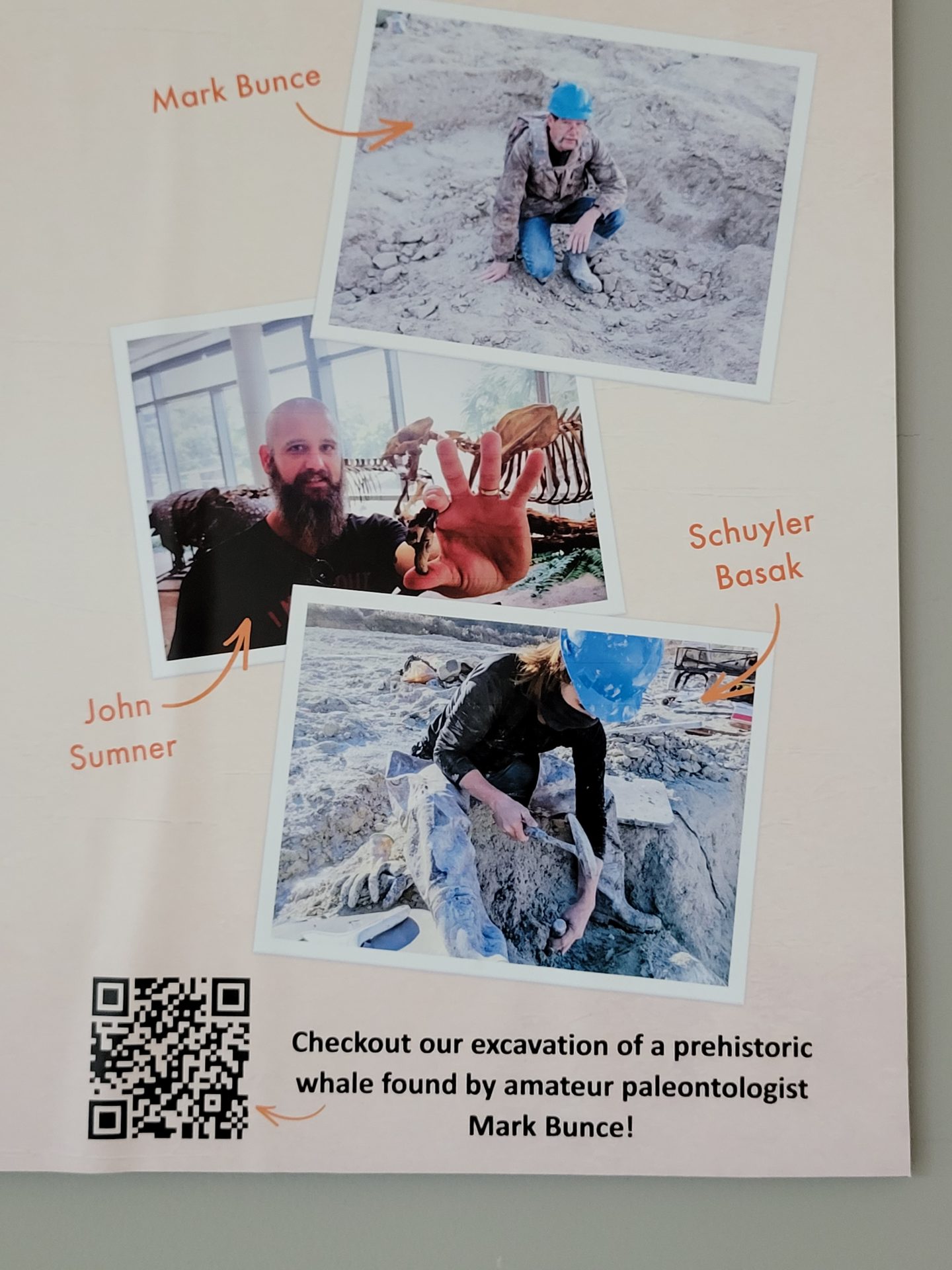
For years there has been a disconnect between the world of academic paleontologists and the world of amateur paleontologists. The academics – responsible for building what we know of the past by way of research, data analysis, and scientific publications into peer reviewed journals. The amateurs – responsible for nothing more than collecting fossils through endless hours of hunting, or at least that’s what most have thought. Today we see a revolution of this relationship taking place. A revolution owed in part to the open mind of Dr. Bobby Boessenecker – the lead “whaleonotologist” at the Mace Brown Museum at College of Charleston. The Mace Brown Museum is a small, non funded museum housed on the 2nd floor of the School of Science and Mathematics building of the College of Charleston in Downtown Charleston and is home to around 15,000 fossils – many of which were collected and donated by local amateur paleontologists over the years.

What makes Mace Brown different? They do not have storage space for specimens so they only take what is deemed scientifically significant and can be used in future or ongoing research. What makes Dr. B different? Dr. B is one of a select handful of academic paleontologists that appreciate the efforts made by amateurs to locate and recover specimens and gladly accepts them for use in his research. As a result, we are now witnessing a new age of academics and amateurs coming together in a beautiful effort to understand more about the marine environment present in the Coastal plain of South Carolina during the Eocene, Oligocene, and Miocene of South Carolina – a feat that has never before been done.

The Palmetto team as a whole believes in supporting the advancement of paleontological research and contributing to the paleontological record for South Carolina and when it comes to our donations of specimens – Dr. B at the Mace Brown Museum is definitely our go to choice! I think my favorite part of working with Dr. B is that when I find something that interests Dr. B, he automatically knows exactly what he wants to use the specimen for and I never have to doubt whether or not my specimen will ever see the light of day again. Knowing that my contributions help give support to his and others research and do not just collect dust on a shelf in a dark warehouse brings me a great deal of comfort. Dr. B, without knowing it, makes way for the dreams of those outside of the academic world to come true by allowing us all to in some way shape or form participate and contribute to paleontological research.

For anyone planning a trip with Palmetto, I would highly recommend scheduling a tour at the Mace Brown Museum as well! Entry is free however donations are gladly accepted! While on your tour you will have the opportunity to see several breath taking specimens including a full room designated specifically to the evolution of whales (by far the most amazing display room EVER), a Megalodon dentry, and much more! You will also have the chance to see the “Amateurs Exhibit” which is a series of cases full of specimens recovered and donated to the Mace Brown Museum that Dr. B and his awesome wife Sarah put together in appreciation of the efforts made by locals to support their research. Trust me, this is definitely a “Must-See” that should part of every fossil hunters trip to the Lowcountry of South Carolina! Thanks Dr. B for being so awesome and we all look forward to working with you more in the future! And for anyone wanting to make donations to the Mace Brown Museum, here’s a link where you can do just that!
https://give.cofc.edu/donate-CofC?fid=lAHR8B7oCIY%3d&fdesc=%2f3ZBUz6fd3VkG1C75ztSpkbpfyugwV8udofNcnYdFR3y3thGOyL7J%2bQTVzOEAZDPxibBm6wkFmg%3d

Posted on Leave a comment

Waipatiid of the Ashley: Part 1

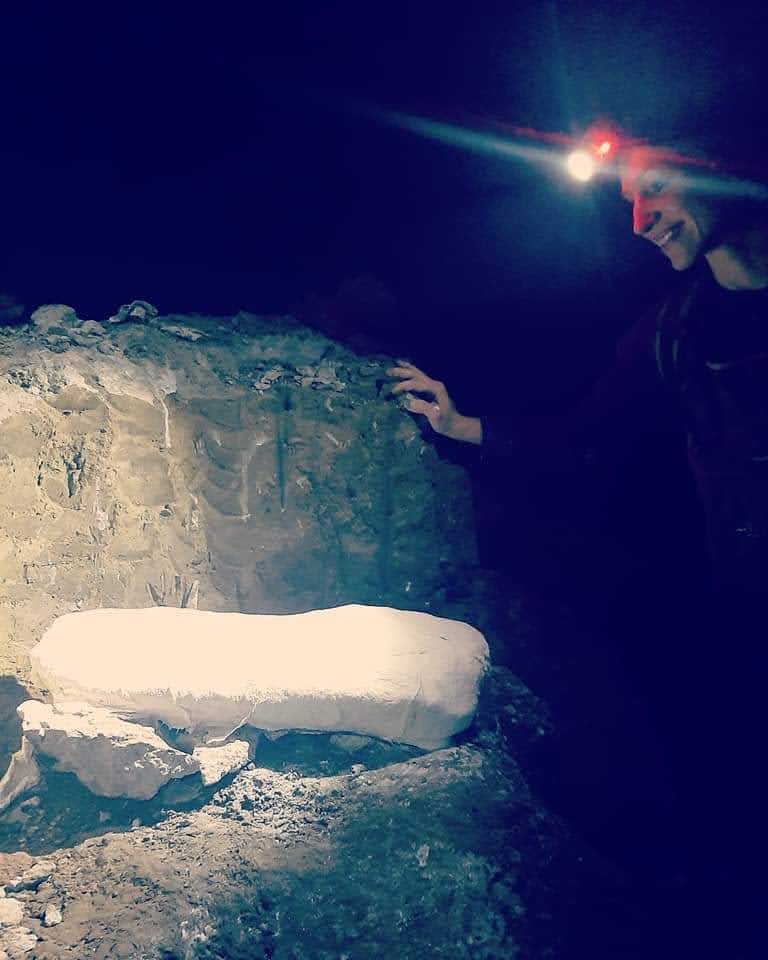
We were out scouting a new construction site when I noticed a section of thin bone material jutting out of the wall of the retention pond which I immediately recognized to be jaw bone. I paused for a moment and then giggled with excitement and decided to set my things down and get to work. The first thing I needed to do was check the area for other signs of bone to see if I could find any clues as to what the animal might be or if there might be any pieces of the bone laying somewhere nearby. 


The tractor had struck the animal while digging the pond and I knew firsthand that there could be fragmented bone laying in the limestone at the base of the wall and I would need to collect the material before getting to work on the jaw bone. Within a few minutes I located a vertebrae that appeared to be associated about 3 feet from the jaw and a few badly fragmented bone shards laying at the base of the wall. I carefully put the bone shards away and pulled out my kit – chisel, rock hammer, and shovel – and set to work.


The first thing I needed to do was remove the overburden from above the animal to determine how far back into the wall the jaw went – I used my shovel and rock hammer to do this part. Next, I needed to trench out an area around the jaw so as to create a pedestaled block that I would be able to safely remove. Since there was no other bone laying near the jaw I was able to move relatively quickly through this part of the process. 


Once the trench was in place, it was time to cover the block with plaster of paris strips. The strips hardened within 15 minutes and provide stabilization to the block so that when flipped, the material is held in place and the structural integrity of the fossil is preserved. For this part I had the assistance of my husband Joshua Basak. Suddenly it began to rain and Josh and I began our race against the clock to get the specimen removed in fear that the weather would soon take a turn for the worse.


Next, it was time to pull out the power tools – time for the SawZall. Using a 12″ reciprocating blade on a 20v SawZall, I placed a cut line roughly 4″ below the settling line of the bone so as to ensure that I would not cut through any of the animal. Next, we flipped the block and applied the plaster of paris to the under-side of the block, finally sealing it and making it ready to carry out of the pit. 


As I picked up the tools and loaded the bag, the rain began to come down harder and we realized we only had a few minutes left to get the block to the truck. Without hesitation, Josh reached down and scooped the block into his arms and began the 200 yard journey across the floor of the hard-pan bottomed retention pond through 2 feet of water. Nervously I followed behind him carrying the 80 pound bag of tools, praying he made it to the truck before the sky let loose completely. Within minutes we arrived safely at the truck and were on our way home to begin the next part of the journey.


Stay tuned for the Waipatiid of the Ashley part 2 and as always – Until next time, Happy Hunting!

Posted on Leave a comment

The Chandler Bridge Dig

The Chandler Bridge Dig

The temperature outside was a mere 34 degrees and the sun was barely shining through the cloudy skies but the team was determined to break ground. The plan had been in place for months and everyone was on the edge of their seats with suspense waiting to to see what would be found during the dig. We were opening up the Chandler Bridge formation which meant a rare opportunity to dig for Oligocene aged marine fossils dating back to 23.6 to 25.7 million years ago.

Suddenly the moment we had all been waiting for – we heard the sound of the mini-excavator and Billy went to work. 


Within a few minutes we could hear the sounds of roots snapping and the bucket swiveling on its’ hinges dropping 2 ton loads of dirt on the ground. We were all sitting in a row facing the hole with our shovels in hand waiting for the moment that the engine would turn off and we would be able to get to work. The suspense made the 30 minutes that it took to open the hole seem like a lifetime.

Finally, the engine stopped and it was time! With not a second to spare, we all sprang to our feet and jumped down into the 10 ft deep hole frantic to claim our spot for the day. Within minutes all you could hear was the sound of shovels shaving through the layer. 


Fifteen minutes into the dig and suddenly Jordy screamed – “I’ve got one!”, we all stopped to look. She had found a beautiful 2″ C. angustiden with a green tinted blade, chocolate bourlette, and a tan colored root. In other words, she had just found the first gem of the day! As the day passed by, we all took turns exclaiming our excitement over our finds as several more C. angustidens were unearthed in addition to several other specimens including a beautiful atlas vertebrae, Hemipristis serra’s, misc. bone fragments, and an assortment of fish vertebrae.


 The time flew by and before we knew it, the sun was setting on our beautiful operation – it was time to close up the hole and head home.

We made our way up to the surface and stood by watching with bittersweet emotions as Billy filled the hole back in and closed the ground on our Chandler Bridge dig. We were all thankful for the opportunity to participate in the days wonderful adventure but who are we kidding, none of us wanted to see it come to an end! Until next time, Happy Hunting!